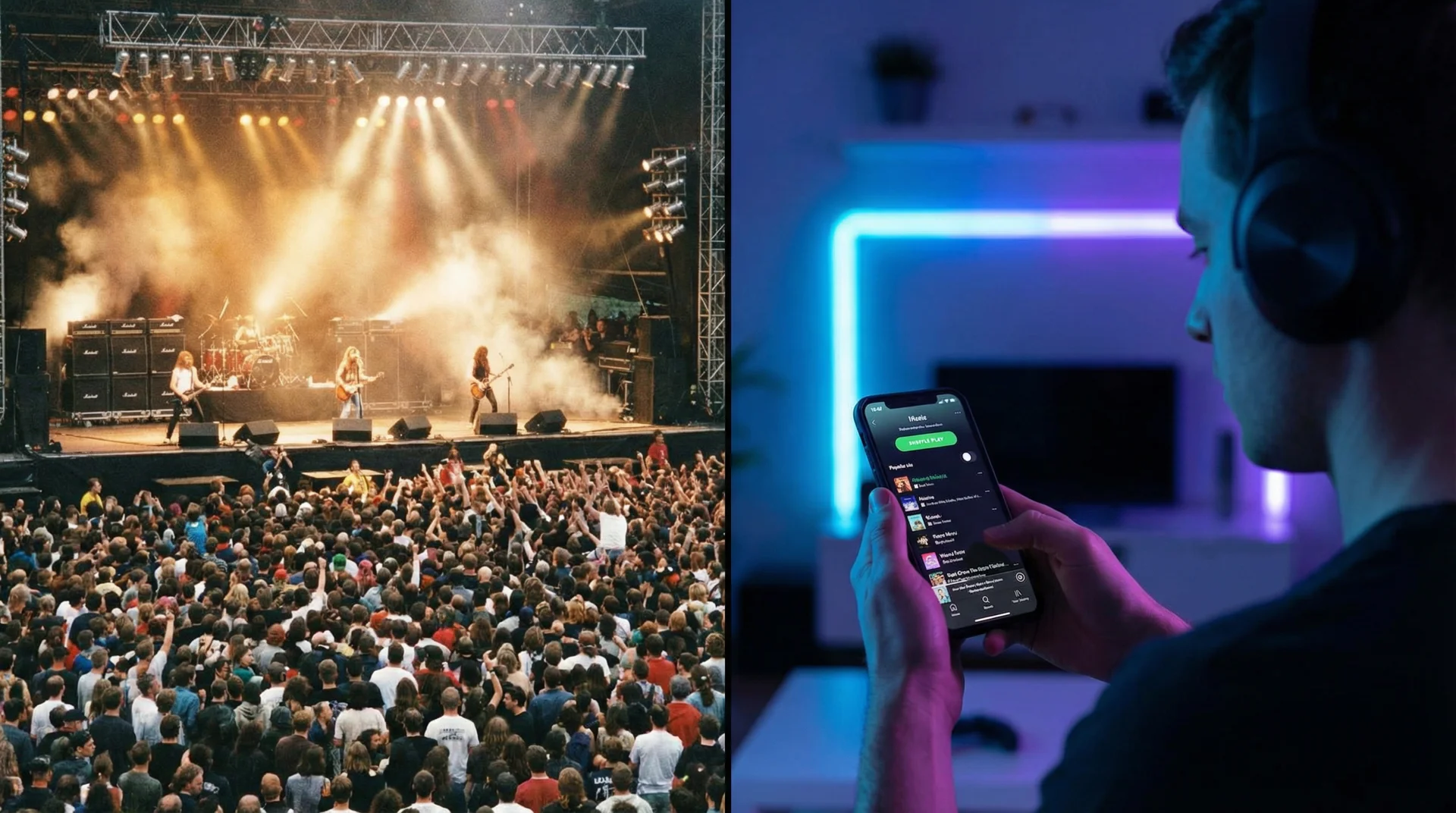
Every few months, some music journalist dusts off the same tired obituary: "Rock is dead." They point to streaming charts dominated by pop and hip-hop, the absence of guitar-driven anthems in the top 40, and the graying crowds at classic rock festivals. They're asking the wrong question entirely.
Rock isn't dead. It's just allergic to algorithms.
The Algorithm Killed the Guitar Star
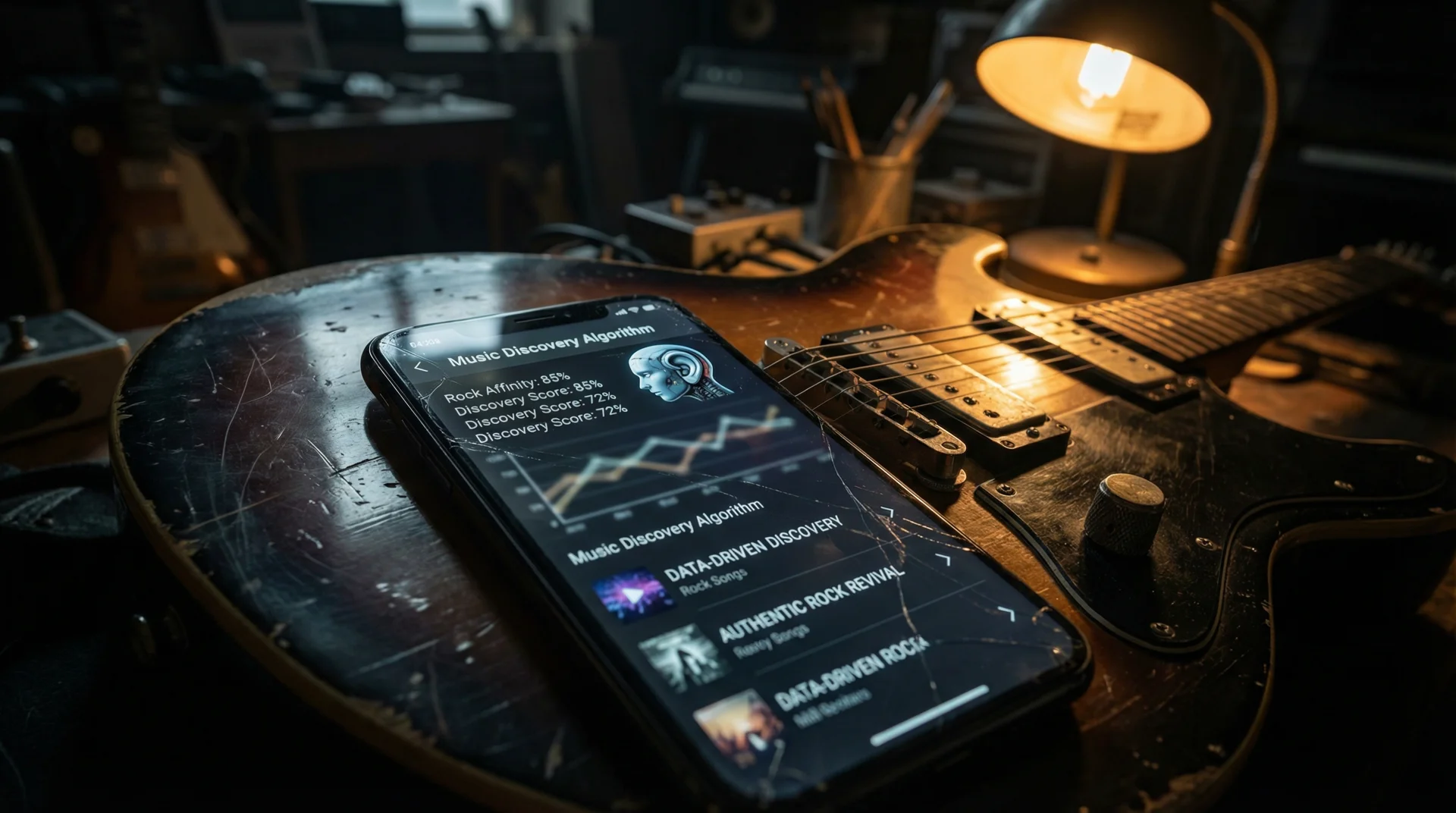
Here's what actually happened to rock music: it got caught in a system designed to reward predictability over power. Streaming algorithms favor songs that keep you scrolling, not songs that stop you dead in your tracks. They want 15-second hooks for TikTok, not four-minute journeys that build to something transcendent.
Rock music — real rock music — doesn't compress well into bite-sized content. You can't capture the moment when "Stairway to Heaven" shifts gears in a 15-second clip. The slow burn of "Black" by Pearl Jam doesn't translate to infinite scroll culture. These songs were built for humans who had time to listen, not algorithms optimized for engagement metrics.
The result? Rock artists either compromise their sound to chase algorithmic relevance, or they get buried beneath an avalanche of AI-optimized content designed to hit neurological pleasure centers without ever touching the soul.
Underground and Uncompromising
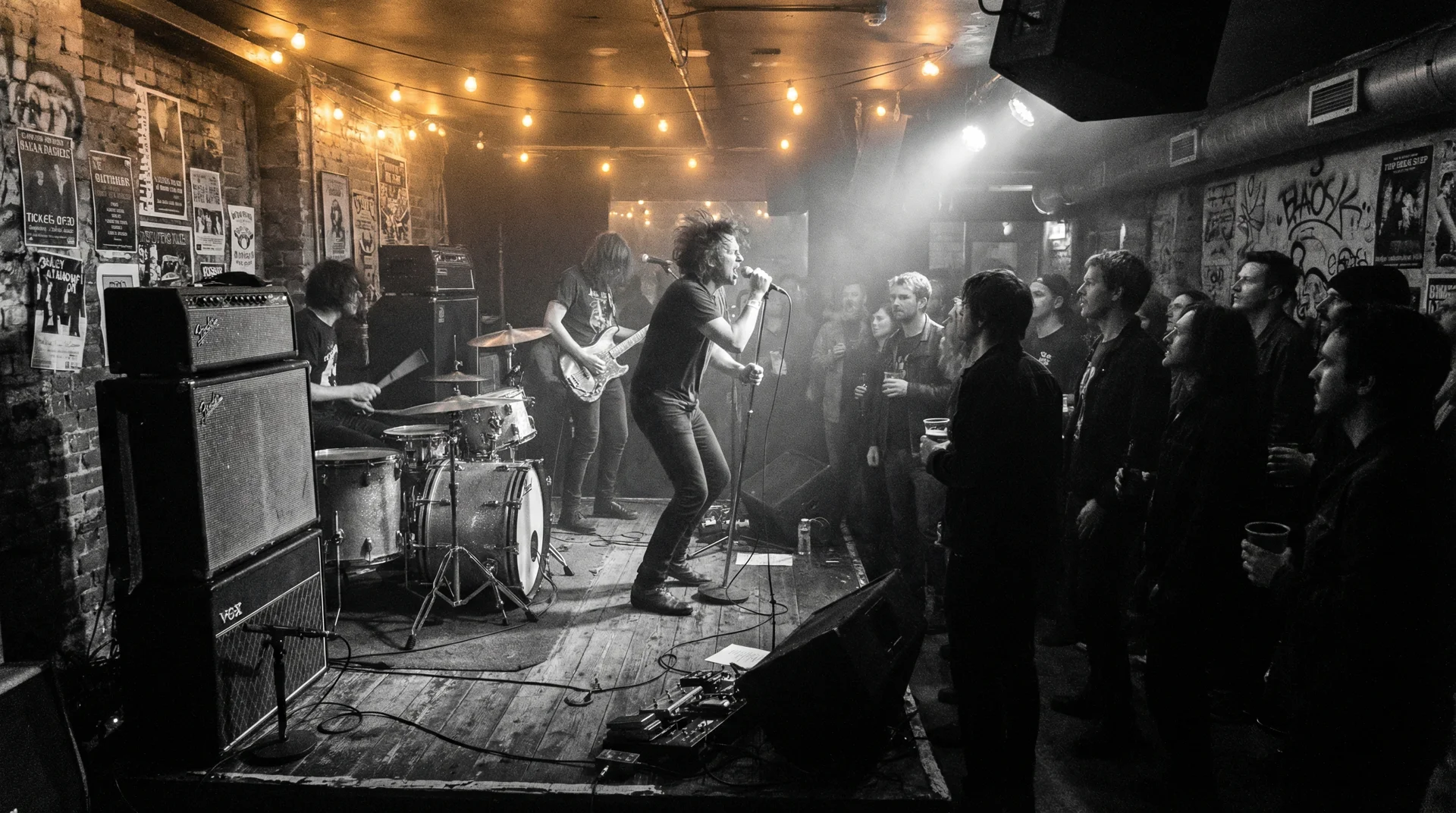
But here's what the obituary writers miss: rock never needed mainstream approval to survive. The genre's greatest moments happened in garages, dive bars, and small venues where the music mattered more than the metrics. That world still exists — it's just harder to find when you're used to having culture spoon-fed to you by recommendation engines.
Drive through any mid-sized American city and you'll find them: bands that sound like they stepped out of 1994, playing to crowds that remember when music could change your life. They're not trying to go viral. They're trying to create something real in a world increasingly obsessed with what's fake.
These aren't tribute acts or nostalgia merchants. They're artists who understand that rock's power was never about commercial success — it was about authenticity, rebellion, and the belief that three chords and the truth could shake the foundations of everything.
The Streaming Paradox
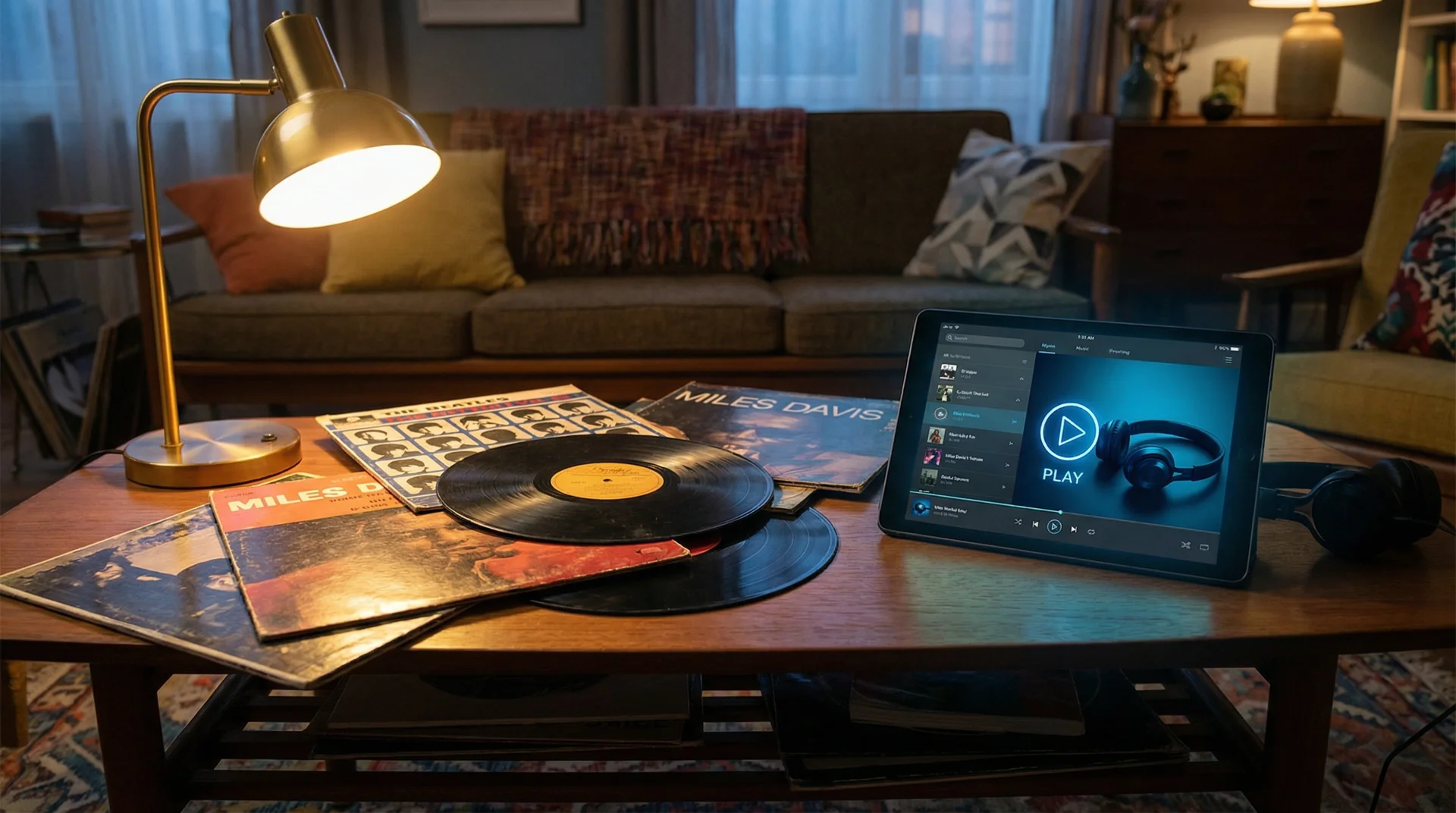
Ironically, streaming has made discovering real rock music both harder and easier. Harder because the algorithms actively work against deep discovery. Easier because once you know where to look, there's more great rock music being made right now than at any point since the 90s.
The bands worth finding aren't the ones Spotify suggests after you play "Mr. Brightside" for the thousandth time. They're buried in playlists with 47 followers, playing festivals you've never heard of, building audiences one converted listener at a time.
This is rock music returning to its roots: underground, uncompromising, and utterly indifferent to what the industry thinks it should sound like.
What Rock Actually Needs
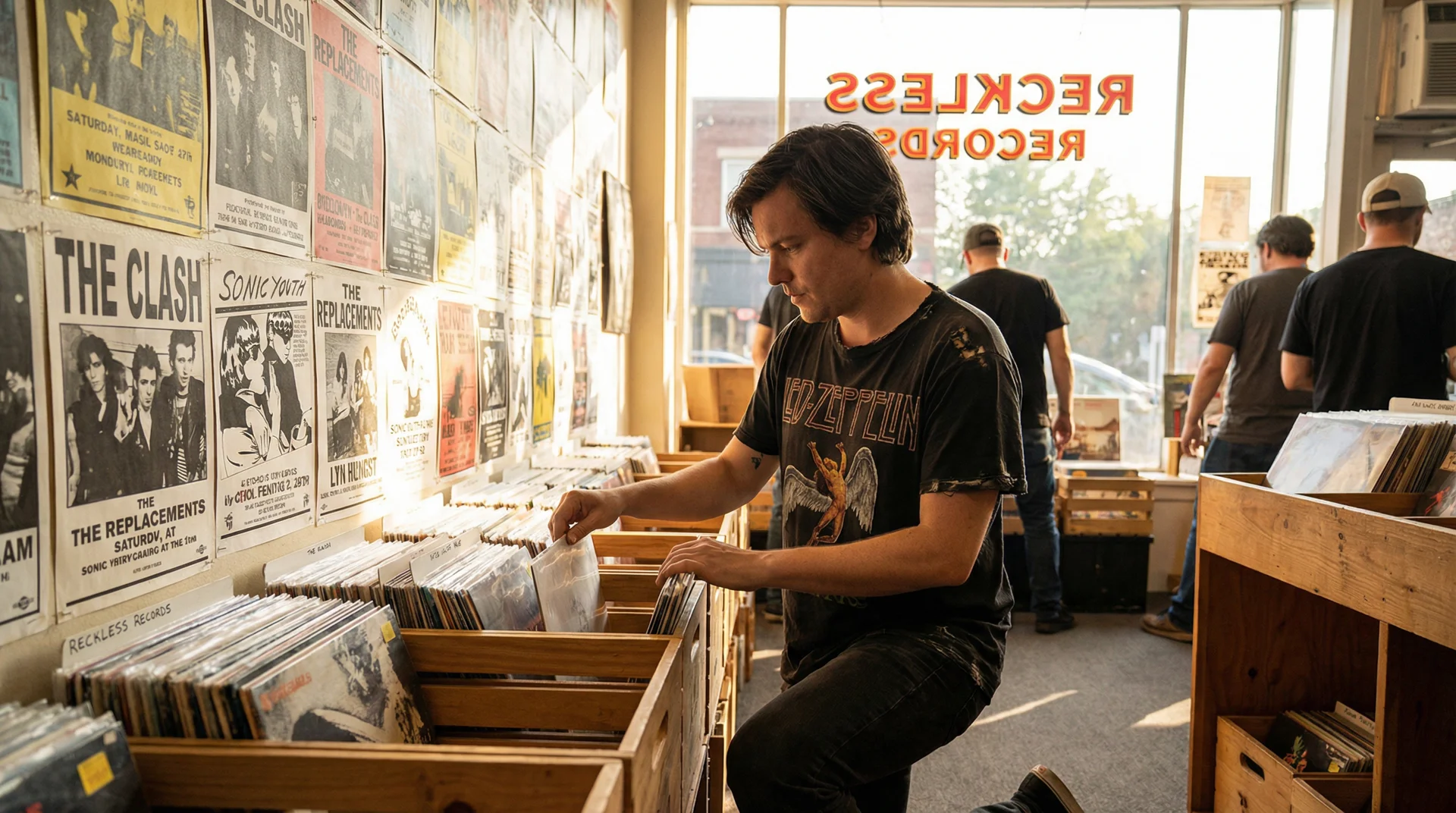
Rock doesn't need saving. It needs people who remember why it mattered in the first place. It needs listeners who value substance over virality, albums over singles, and experiences over content. It needs people who understand that some music is meant to be felt in your chest, not consumed as background noise while you scroll.
The question isn't whether rock music can survive in the streaming era. It's whether streaming culture can make room for music that refuses to compromise. Based on what we've seen so far, the answer is probably not. And honestly? That might be exactly what rock music needs.
Rock was always about rejecting the mainstream's definition of success. Maybe being invisible to algorithms isn't a death sentence — maybe it's a return to form. Long live Rock N' Roll!